
Brawley City Directory Collections
The clearest verified collection is an Imperial Valley city directory run that includes Brawley, Calexico, Calipatria, El Centro, Heber, Holtville, Imperial, Niland, and Westmoreland. The National Archives identifies editions for 1926, 1928, 1930, and 1933. These are valley-wide volumes, not a confirmed Brawley-only series. The source does not name a publisher or establish that every edition has a reverse section.
| Collection | Years | Where held | Access |
|---|---|---|---|
| Imperial Valley directories including Brawley | 1926, 1928, 1930, 1933 | National Archives Building and regional facilities | Microfilm or reference access |
| Local Brawley city directories | Not verified | Brawley Public Library inquiry | Confirm title, publisher, year, and call number |
| Reverse or criss-cross directories | Not located | Library or Pioneers’ Museum inquiry | Do not assume a local run |
| Newspapers and obituaries | Title-specific | Library, Chronicling America, CDNC | Mixed free and library access |
| Federal census schedules | 1900 to 1950 relevant | NARA and genealogy databases | Public schedules through 1950 |
The table keeps the Brawley city directory claims narrow. A collection can be real without being Brawley-only, and a library referral can be useful without proving that a particular shelf holds a particular year.
Note: The verified Imperial Valley editions include Brawley, but the research does not establish a publisher or a complete city-only run.
The Verified Imperial Valley Years
The National Archives directory inventory is the best verified starting point for the Brawley city directory years. Read the catalog language closely: Brawley appears inside an Imperial Valley run. The inventory does not support a publisher label, a complete year span, or a claim that a reverse directory was present.
The NARA Imperial Valley directory table identifies Brawley inside the 1926, 1928, 1930, and 1933 editions.
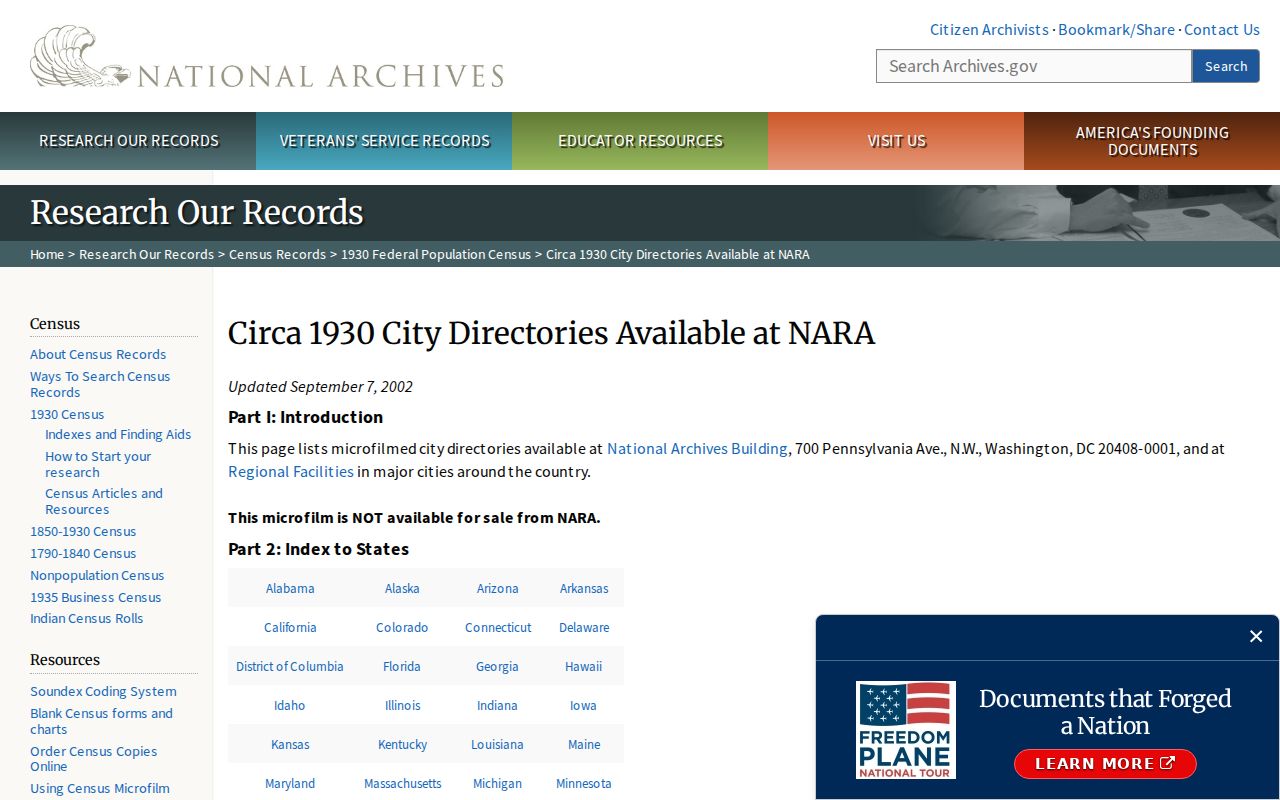
For a research note, cite the edition year and the NARA table rather than writing “the Brawley 1930 book” as if the volume were city-only. If a scan or microfilm reel supplies a title page, record its exact publisher and volume language before expanding the description.
Ask the Brawley Library by Title
The Brawley Public Library is the hyper-local first stop for a city directory search. Its Main Branch is at 400 Main Street, Brawley, with 760-344-1891 and library@brawley-ca.gov listed in the research. The public hours are Tuesday through Thursday 9 to 5, Friday 9 to noon, and Saturday 9 to 1. The Del Rio Branch is at 1501 I Street, with evening hours on Monday and Tuesday. Confirm the current schedule before visiting.
Ask staff to check Brawley city directories, Imperial Valley telephone books, reverse or criss-cross directories, high-school yearbooks, obituary clipping indexes, and newspaper microfilm. Request the exact title, publisher, edition year, call number, branch, and access condition. The library page and catalog do not publish an itemized directory run, so a careful holdings check is part of the method.
A library-card catalog login shows a patron’s own circulation activity. It does not prove that a genealogy collection exists. Treat the catalog as a contact and discovery route, then ask a staff member about the historical shelf.
Note: Library staff should confirm title, publisher, edition year, call number, branch, and access conditions before a holding is cited.
Do Not Invent a Brawley Publisher
Many city directory collections are casually described by a familiar commercial publisher, but the Brawley research does not verify that label. The NARA table names an Imperial Valley run without identifying a publisher. That gap is meaningful. A title page, copyright page, and abbreviation key are the evidence needed to describe a volume accurately.
When a librarian or archivist confirms a volume, write down its full title, publisher, year, geographic coverage, format, reel or call number, and whether an address-ordered section exists. Those details make a later Brawley city directory lookup repeatable and prevent a valley-wide volume from being mistaken for a city-only roll.
Reading a Brawley City Directory Entry
An entry is a set of clues. It may list a surname and given name, a spouse in parentheses, a widow or widower notation, an occupation, employer, business address, home address, an owner or occupancy mark, and a cross-reference. The exact combination varies by edition. A reverse section, if the volume has one, may list street, number, occupant, or telephone details.
| Entry field | What to record |
|---|---|
| Name | Exact spelling, initials, suffix, spouse notation, and cross-reference. |
| Occupation | Work description and employer as printed for that year. |
| Address | House number, street spelling, residence or business marker. |
| Family clue | Widow notation, spouse, adult household member, or related entry. |
| Abbreviation key | The volume’s own explanation of symbols and short forms. |
- Criss-cross directory
- An address-order section that reverses the usual name-first arrangement.
- Householder index
- A name or household finding aid that may lead to a street entry.
- Abbreviation key
- The edition-specific legend that explains occupation, residence, and other marks.
- Index versus image
- An index points to an entry; the volume image or reel is the source to read.
Never expand a short form from memory. Photograph the key before transcribing the Brawley city directory entry, and preserve the spelling printed in that edition.
Note: An abbreviation key belongs to its own edition; conventions from another publisher may change the meaning of a short form.
Reverse Sections and Brawley Streets
A reverse section can turn a known address into a past household clue, but the local holdings are unverified. Ask whether the library or Pioneers’ Museum has a volume with street-order pages, which years it covers, and whether its entries show occupants, telephone numbers, or only businesses. Do not assume that a valley directory includes the same features as a later city volume.
When a reverse section is available, start with the exact number and street, then compare the alphabetical section for adult household members. The modern address-keyed chain belongs on the Brawley street directory page. Historical volumes should remain the focus here.
Moving One Brawley Household Across Editions
Tracing a household takes patience because an annual directory may omit a person, change a spelling, or record a new address. Use one known entry as an anchor and move through adjacent editions rather than jumping to a conclusion from a single year.
- Start with an exact name, address, or family clue in one verified directory year.
- Search the next available edition for the same spelling and for adult household members.
- Write down every address, employer, spouse notation, and abbreviation without normalizing it.
- Check an address-order section, if the edition has one, when the name disappears.
- Pair the directory with a census schedule, newspaper, obituary, deed, or probate record.
A disappearance may mean a move, death, an unlisted entry, or an index variation. An obituary or probate file can close a family trail, while a deed can show that an owner changed even if the household did not. A Brawley city directory is strongest when each transition has a dated companion source.
Brawley Directories and Census Schedules
Federal census schedules supply household structure at decennial intervals, while a Brawley city directory can fill some of the years between them. NARA’s release rule makes schedules through 1950 public in 2026. The 1890 census is largely lost nationally, so a gap before the twentieth century should be expected rather than filled with a guessed record.
The National Archives census research page explains the schedule access route used alongside historical directories.
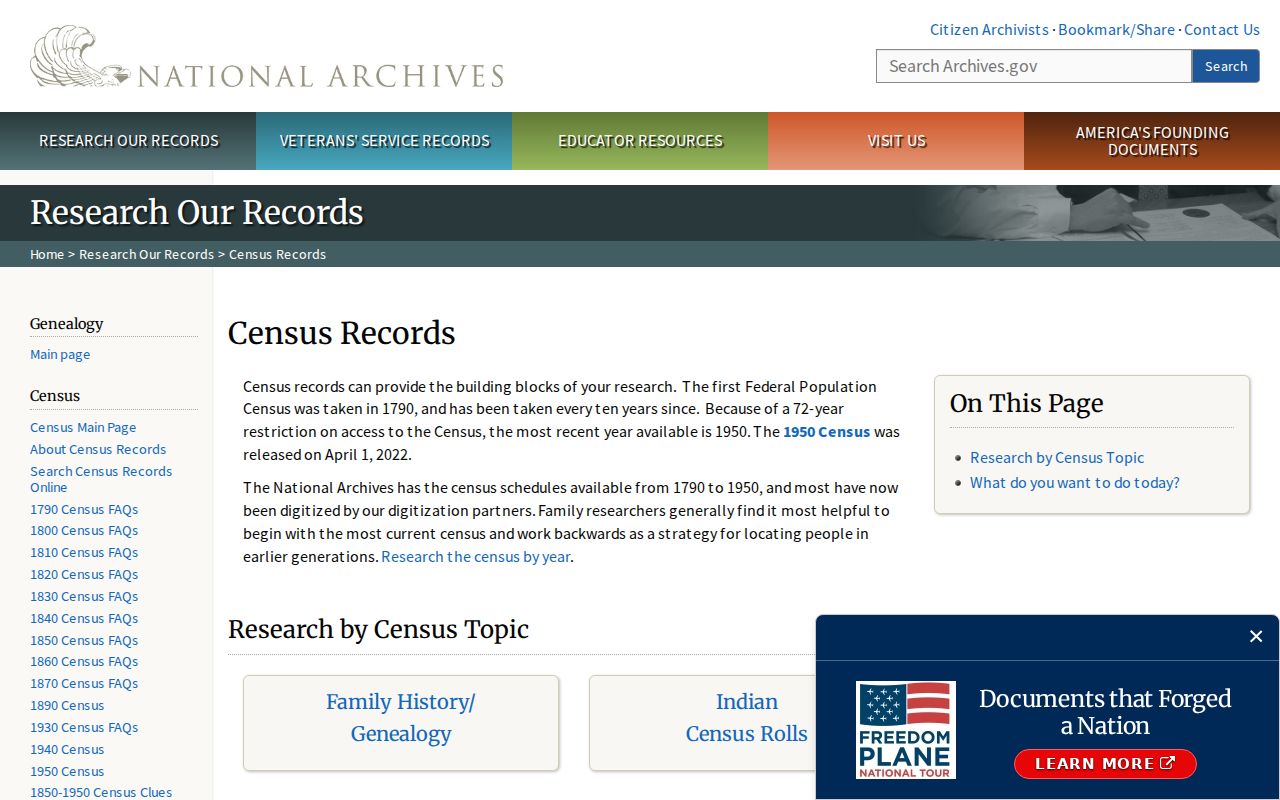
Compare address, age, relationship, birthplace, occupation, and spelling, but remember that a directory and a census may use different dates and definitions. A directory line is not proof of every person present all year. The combination is a better historical picture than either source alone.
Note: NARA schedules through 1950 are public in 2026, while the 1890 federal census is largely lost nationally.
Maps, Sanborn Sheets, and Old Addresses
The Library of Congress catalogs an official Brawley cadastral map adopted in 1919 and corrected to January 1, 1927. It also catalogs a 20-sheet Brawley Sanborn volume covering March 1922 through December 1949. The Sanborn sheets are not available online according to the catalog, so do not describe them as digitized images. They can still be a useful reference lead for building footprints, materials, uses, and street-number changes.
Use the LOC Brawley cadastral map record, the LOC Sanborn catalog record, and the Library of Congress Sanborn collection to establish what is verified. Compare the map with the directory address, subdivision description, deed, and modern parcel geometry. The map may explain why a name appears under an old street form.
Brawley’s County-Boundary Story
Imperial County was created in 1907 from eastern San Diego County, and Brawley incorporated in 1908. That local sequence changes where a historical search should begin. A person connected to early Brawley may appear in San Diego County records, while later county and city records belong to the newer custodians. Search by predecessor jurisdiction when a directory, deed, or vital trail reaches before 1907.
| Era marker | Why it matters to a Brawley city directory search |
|---|---|
| Before 1907 | Regional and San Diego County groups may hold the earliest trail. |
| 1907 | Imperial County becomes the primary county framework. |
| 1908 | Brawley’s municipal records begin within the newer county setting. |
| 1919 to 1927 | The official map preserves a bridge between early streets and later directories. |
| 1926 to 1933 | The verified Imperial Valley directory editions include Brawley. |
The Pioneers’ Museum, formed in 1928, preserves documents, newspapers, letters, photographs, and early-settler material. Its research library is by appointment, with a $25 research fee and potentially $25 for each additional hour. A museum finding aid can add local color without replacing a county record or a dated directory entry.
Note: Brawley’s 1907 county break and 1908 incorporation can change the custodian used for an older name or address.
Close a Brawley Directory Trail Carefully
A city directory gives a name-and-place clue for an edition year. Confirm it with the record that answers the next question: a deed for title, a census for household structure, a vital record for an event, a newspaper for a reported story, or a probate file for succession. The Brawley city directory remains the historical shelf at the center, but its value grows when the surrounding sources are named and dated.
When a modern person search is the real goal, use the separate resident lookup workflow rather than stretching an old book into a current claim. California historical directory research should preserve uncertainty where the local holding, publisher, reverse section, or coverage year has not been verified.